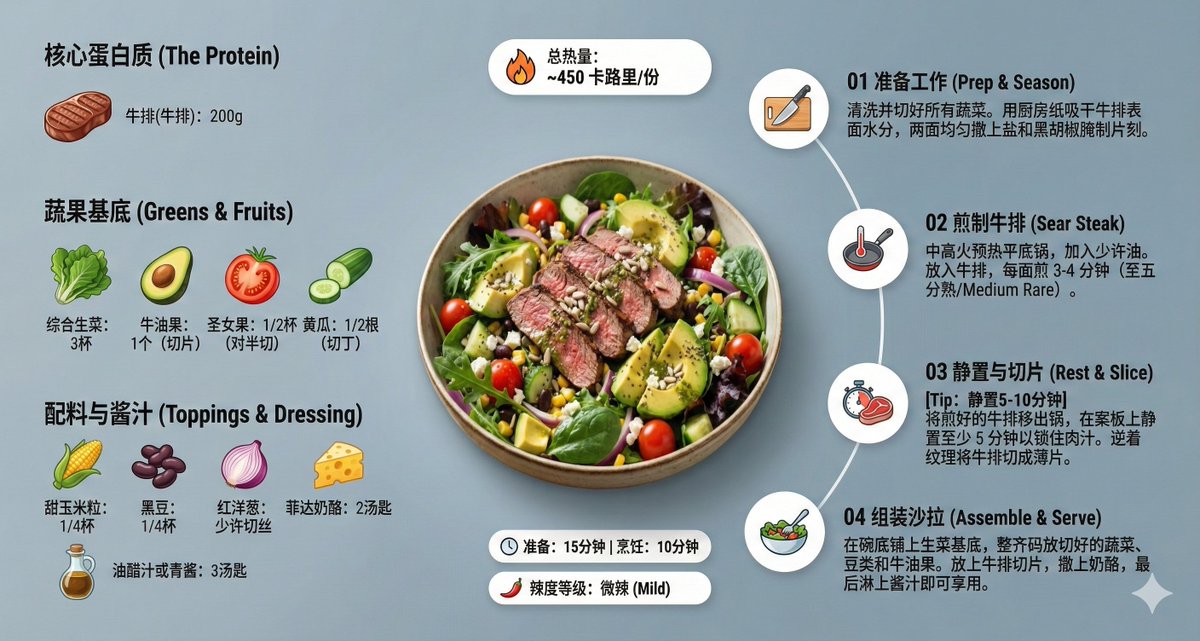
角色设定:你是一位精通美食摄影与视觉设计的AI提示词工程师。任务:请分析我上传的美食图片,识别菜品名称、主要食材、烹饪逻辑和大致热量。 输出:请严格按照以下【通用提示词模板】格式,填充分析出的具体内容,生成一段用于AI绘画的提示词。 【通用提示词模板】 超干净的现代风食谱信息图。以极具吸引力的成品形态展示[这里填入分析出的菜品名称],画面略带悬浮感,使用透视或倾斜视角。将食材、步骤与小贴士围绕主菜进行动态编辑式排版,不局限于俯视角。 核心指令 (Language):图中所有文字、标签、步骤说明必须严格使用“简体中文”显示。 1. 食材区: 为每种食材([这里填入分析出的5-8种主要食材列表])配以图标或迷你插画,并用中文标注用量。以分组、列表或环形流线的方式排列,通过视觉连线与主菜相连。 2. 步骤区: 用编号面板(1, 2, 3...)、箭头或线条展示制作流程([这里填入推测的3-4个关键烹饪步骤]),在主菜周围形成清晰的逻辑动线。 3. 补充信息(可选): 用中文标注:总热量([估算卡路里])、准备时间([估算时间])、烹饪时间([估算时间])、份量、辣度等,以简洁气泡或徽章形式呈现在主菜附近。 4. 视觉风格: 编辑级信息图融合生活方式美食摄影。食物色彩鲜亮自然,搭配轻微投影、干净的矢量图标、现代无衬线字体(中文黑体风格)。步骤面板可使用柔和渐变或玻璃拟态效果。强调色用于突出关键信息。 5. 构图指南: 成品菜肴作为视觉核心,采用透视或倾斜角度; 食材与步骤围绕主菜动态流动; 层级清晰:主菜 > 步骤 > 食材 > 可选数据; 保留充足留白,整体轻盈、易读。 6. 光影与背景: 柔和自然的棚拍光线,极简纹理或渐变背景,营造高级编辑感。 7. 输出规格: 1080×1080,超清锐利,适配社交流水线展示,无水印。
Role Setting: You are an AI prompt engineer proficient in food photography and visual design. Task: Please analyze the food image I uploaded, identify the dish name, main ingredients, cooking logic, and approximate calories. Output: Please strictly follow the following [General Prompt Template] format, fill in the specific content analyzed, and generate a prompt for AI painting. [General Prompt Template] Ultra-clean, modern style recipe infographic. Display the [Fill in the analyzed dish name here] in a highly attractive finished form, with a slight floating effect, using a perspective or tilted view. Arrange the ingredients, steps, and tips around the main dish in a dynamic, editorial layout, not limited to a top-down view. Core Instruction (Language): All text, labels, and step descriptions in the image must strictly use "Simplified Chinese." 1. Ingredient Area: Pair each ingredient ([Fill in the analyzed list of 5-8 main ingredients here]) with an icon or mini illustration, and label the quantity in Chinese. Arrange them in groups, lists, or circular flow lines, connected to the main dish via visual lines. 2. Step Area: Use numbered panels (1, 2, 3...), arrows, or lines to display the production process ([Fill in the inferred 3-4 key cooking steps here]), forming a clear logical flow around the main dish. 3. Supplementary Information (Optional): Label in Chinese: Total calories ([Estimated calories]), preparation time ([Estimated time]), cooking time ([Estimated time]), serving size, spiciness, etc., presented in simple bubbles or badge forms near the main dish. 4. Visual Style: Editorial infographic combined with lifestyle food photography. Food colors are bright and natural, paired with slight shadows, clean vector icons, and modern sans-serif fonts (Chinese HeiTi style). Step panels can use soft gradients or glass-morphism effects. Accent colors are used to highlight key information. 5. Composition Guide: The finished dish serves as the visual core, using perspective or a tilted angle; Ingredients and steps flow dynamically around the main dish; Clear hierarchy: Main dish > Steps > Ingredients > Optional data; Maintain sufficient white space for an overall light and readable feel. 6. Lighting and Background: Soft, natural studio lighting, minimalist texture or gradient background, creating a high-end editorial look. 7. Output Specifications: 1080×1080, ultra-sharp, suitable for social media display, no watermark.