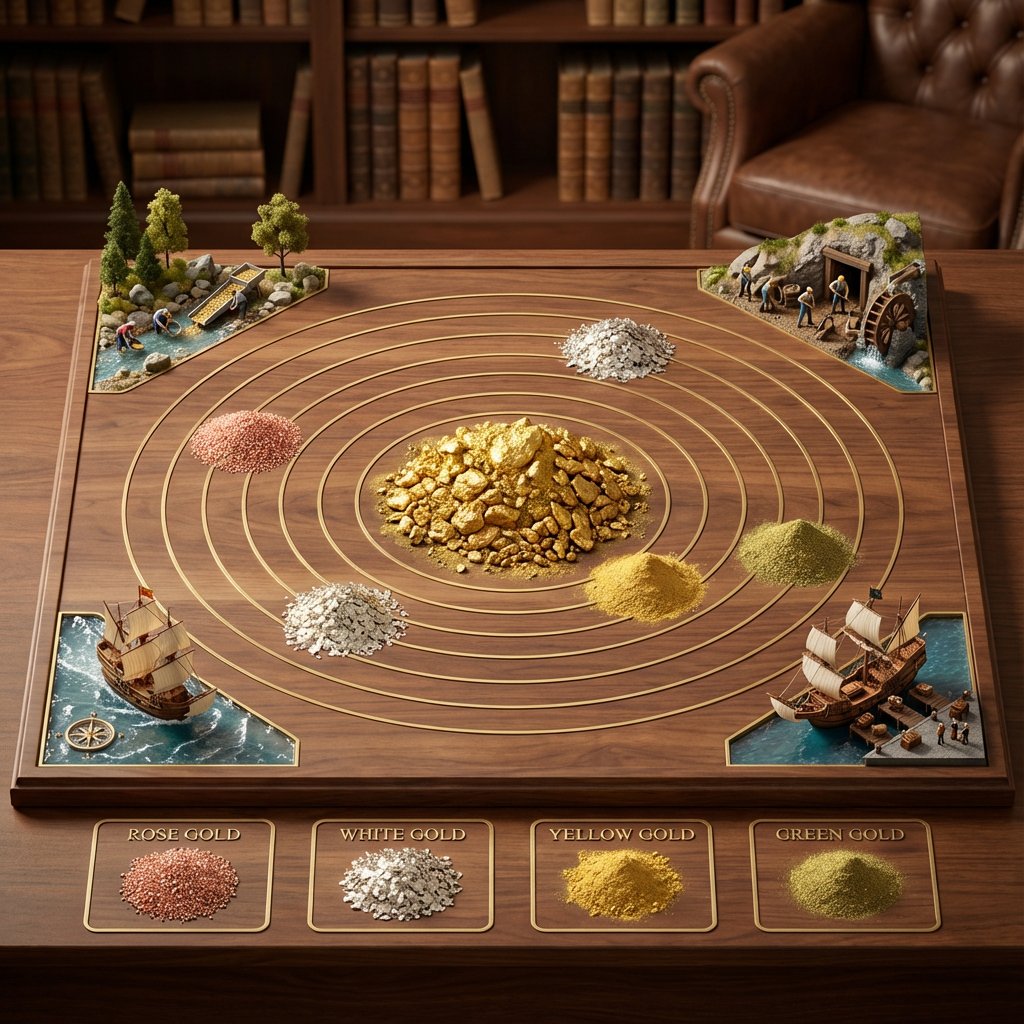
for Coffee 1. **商品解构** 输入 A 是一种历史商品或资源(例如:香料、茶叶、丝绸、咖啡、黄金)。 将该商品解构为 3 种教育资产: * **核心:** 识别最常见或最有价值的原始形态。 (例如:香料 -> 一堆黑胡椒粒。茶叶 -> 一堆红茶茶叶。黄金 -> 一大块金块)。 * **品种:** 识别 4-5 种不同的变体或颜色。 (例如:香料 -> 红辣椒粉、黄姜粉、棕色肉桂。茶叶 -> 绿茶、白茶、乌龙茶、抹茶)。 * **运输:** 识别历史上的运输方式。 (例如:骆驼商队、东印度公司船只、蒸汽火车)。 2. **容器** 目标:“商品宇宙”教育立体模型。 * **底座:** 一块大的方形**抛光胡桃木或橡木板**,放置在图书馆桌上。 * **布局:** 中心采用放射状/圆形设计,角落辅以叙事小景。 3. **中心装饰** * **隐喻:** 商品是世界的中心。 * **太阳:** 大量、有纹理的“核心”材料(步骤 1)堆放在正中心。 * **轨道:** 嵌入式金或黄铜环从中心向外扩散。 * **行星:** 较小的“品种”(步骤 1)堆或球体围绕中心旋转,形成色彩斑斓的纹理光谱(粉末、颗粒、固体)。 4. **叙事角落** * **起源(顶部角落):** 直接雕刻在板上的微型立体模型,展示收获过程(例如:小人采摘茶叶、开采黄金或摇晃香料树)。 * **旅程(底部角落):** 展示“运输”(步骤 1)的微型立体模型。 * **细节:** 水(船只)使用**树脂**,沙漠(骆驼)使用**沙子**。 5. **页脚** * **位置:** 沿着板的底部边缘。 * **格式:** 三到四块嵌入桌面的矩形**木牌**。 * **内容:** 木牌上刻有特定品种的名称(例如:“肉桂”),并堆放该成分的实物样品。 Output: ONE image, 1:1 Aspect Ratio, Isometric Tabletop Photography, "Museum Display" aesthetic, Warm Tones.
for Coffee Input A is a Historic Commodity or Resource (e.g., Spices, Tea, Silk, Coffee, Gold). Deconstruct the commodity into 3 Educational Assets: The Core : Identify the most common or valuable raw form. (e.g., Spices -> A pile of Black Peppercorns. Tea -> A mound of Black Tea leaves. Gold -> A large Nugget). The Varieties: Identify 4-5 distinct variations or colors. (e.g., Spices -> Red Paprika, Yellow Turmeric, Brown Cinnamon. Tea -> Green, White, Oolong, Matcha). The Transit : Identify the historical method of transport. (e.g., Camel Caravans, East Indiaman Ships, Steam Trains). 2. Container Goal: "Commodity Universe" Educational Diorama. The Base: A large, square Polished Walnut or Oak Board sitting on a library table. The Layout: A radial/circular design in the center, flanked by narrative vignettes in the corners. 3. The Centerpiece The Metaphor: The commodity is the center of the world. The Sun: A massive, textured pile of the "Core" material (Step 1) sits in the exact center. The Orbit: Inlaid gold or brass rings ripple out from the center. The Planets: Smaller mounds or spheres of the "Varieties" (Step 1) orbit the center, creating a colorful spectrum of textures (powders, grains, solids). 4. Narrative Corners The Origin (Top Corners): Miniature dioramas sculpted directly onto the board showing the harvesting process (e.g., tiny figures picking tea leaves, mining gold, or shaking spice trees). The Journey (Bottom Corners): Miniature dioramas showing the "Transit" (Step 1). Detail: Use Resin for water (ships) or Sand for deserts (camels). 5. The Footer: Placement: Along the bottom edge of the board. Format: Three or four rectangular Wooden Plaques embedded in the table. Content: The name of a specific variety (e.g., "Cinnamon") engraved in serif text, with a physical sample of that ingredient piled on the plaque. Output: ONE image, 1:1 Aspect Ratio, Isometric Tabletop Photography, "Museum Display" aesthetic, Warm Tones.